You sit down with a mug of tea, look up, and there it is: a neighbour at their upstairs window, looking straight back at you. Not maliciously. Just… there. Their landing window has a perfect view of your patio, your washing line, and the corner where you go to pretend you’re not stressed. If that’s your garden, you don’t need a lecture on why privacy matters. You need options, ranked by what they cost, how much effort they take, and how fast they work. That’s exactly what this is: a troubleshooting guide to how to make your garden more private, starting with fixes you can finish this weekend and ending with the long-term solutions worth saving for.
Before you buy anything, do a five-minute survey. Stand at the spots where you actually sit, not where you think you sit. Look up at first-floor windows, side gates, and any gap between fences. Overlooked gardens usually have two or three specific sightlines causing 90% of the problem, and you can often block those for a fraction of the cost of screening the whole boundary.
Quick Fixes You Can Finish in a Weekend
These are the fast wins. None of them are permanent, which is good news if you rent, and most cost less than a takeaway for four.
Move the seating. It sounds too simple to count, but a huge number of overlooked gardens are only overlooked in one corner. Shift the table, the bench, or the lounger to the sheltered side of a shed, a shrub, or even the house itself, and the problem shrinks before you’ve spent a penny. Angle seating so your back is to the exposed side. You’ll feel the difference immediately.
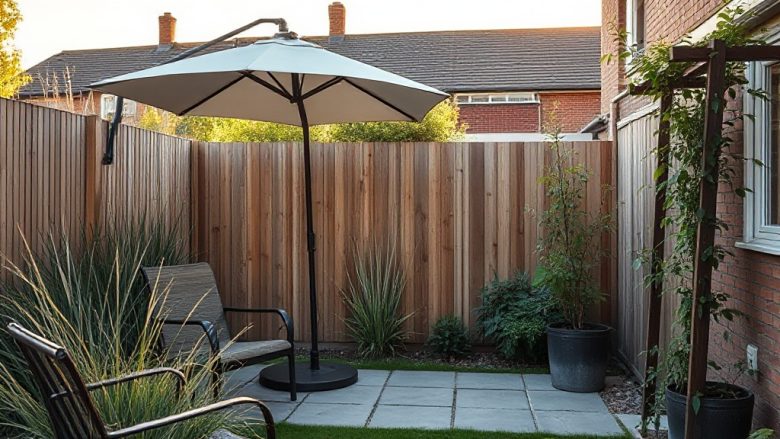
Use a parasol as a screen. A cantilever parasol tilted towards the offending window blocks an upstairs sightline surprisingly well, and it doubles as shade. A standard parasol in a heavy base works too if you position it between you and the view. This is the cheapest instant fix there is, and it takes ten minutes.
Hang outdoor curtains or a sail shade. A fabric sail strung between the house and a post, or a pair of weatherproof curtains on a wire, creates a soft visual barrier. It won’t stop a determined stare, but it breaks the direct line of sight, which is usually enough. Look for showerproof outdoor fabric with rust-resistant eyelets. Expect to pay somewhere between £30 and £120 depending on size.
Add a trellis panel on top of an existing fence. If your fence is just below eye level from next door’s upstairs window, a simple trellis topper adds height without planning headaches. Fix it to the existing posts with brackets, then let a climber do the rest. A 1.8m by 0.3m panel is cheap, light, and a one-person job.
Reed or willow screening rolls. These fix to fence posts, railings, or a frame in an afternoon. They give instant coverage and a warmer look than bare panels. The trade-off is lifespan: cheaper rolls rarely last more than three or four years before they sag and shred. Buy the thickest you can afford and fix them with a batten along the top edge to stop them flapping.
One honest caveat: check what you’re allowed to do before you start drilling. If you rent, get permission in writing for anything fixed to a fence or wall. If you own the place, remember that fence height rules exist, and a quick look at your local planning guidance will save you an awkward conversation later.
Living Screens That Take a Season
If you can wait a growing season, plants give you the best-looking privacy per pound. They also soften noise, which matters more than people expect when a neighbour’s kitchen window is three metres from your bench.
Evergreen climbers are the workhorses here. Star jasmine, ivy, and evergreen honeysuckle will cover a trellis or frame and stay green through winter. They need something to climb, so pair them with the trellis topper you already added. Feed them in spring and keep them tied in, or they’ll wander somewhere unhelpful.
Bamboo in a root barrier is the fastest way to a tall living screen. Choose a clumping variety rather than a running one, and plant it in a sturdy root barrier regardless, because bamboo has no respect for your plans. It can add two metres of height in a couple of seasons and gives a dense, year-round block. Water it well in the first two summers.
Pleached trees are the premium option: a clear trunk with a flat, trained canopy on top, usually on a frame. They screen first-floor windows without turning your garden into a dark tunnel, because light still comes in underneath. They’re expensive to buy mature, but they work almost immediately and look deliberate rather than improvised.
Shrub layers do the quiet work. A mix of photinia, laurel, and viburnum at the boundary gives you density at ground level and mid-height. Plant in autumn or early spring, mulch well, and water through the first year. Don’t plant a single row of one species; a mixed layer looks better and survives pests and disease more gracefully.
One thing to remember with plants: they grow towards light, which often means towards the gap you’re trying to block. Prune with that in mind, and keep the dense growth low and the lighter growth high so you’re not shading your own patio into a cave.
Structural Options and What They Actually Cost
When quick fixes and plants aren’t enough, you’re into structure. This is where budgets spread out fast, so here’s a rough ranking from cheapest to most serious.
Taller fence panels. Replacing standard 1.8m panels with 2m ones, or adding a solid topper, is the most common fix. Costs vary hugely by material, but as a rough guide, a decent panel plus posts and brackets runs from around £60 to £200 per bay, plus labour if you’re not fitting it yourself. Check height rules first, because this is the option most likely to need permission.
A pergola with a solid or slatted roof. This screens overhead views, which fence panels can’t do. Slatted roofs let light through while blocking the direct line from an upstairs window. Expect a few hundred pounds for a basic kit and considerably more for a bespoke timber build. It also gives you somewhere to hang lights and grow climbers, so it earns its keep.
Garden rooms and cabins. If your budget stretches, a small insulated cabin at the end of the garden gives you a private room rather than a private view. Prices start around a few thousand pounds and climb quickly with insulation, electrics, and a proper base. It’s the biggest commitment on this list, and the slowest to install, but it solves the problem completely.
Living walls and modular planters. A planted wall system on a shed or boundary wall gives height without a solid barrier. It’s pricier than a hedge but works where space is tight, and it looks intentional. Maintenance is the hidden cost: irrigation or regular watering is not optional.
What to Check Before You Build or Plant
This section saves you money. Read it before you order anything.
Fence height rules. In most UK gardens, a fence or wall above two metres needs permission, and boundaries next to a highway have stricter limits. If you’re adding a topper to an existing fence, measure the total height, not just the new bit.
Boundary ownership. Check your deeds or title plan before fixing anything to a fence that might not be yours. If it’s a shared boundary, a quick friendly word now prevents a dispute later. Most neighbours are far more relaxed about a trellis than about a two-metre wall appearing overnight.
Light and drainage. A solid screen casts a shadow, and in a small garden that shadow can kill your lawn and your tomatoes. Slatted, planted, or partially open screens keep more light. Also check where water runs; a new raised bed or wall can redirect rain towards your neighbour’s patio, which is a fast route to a complaint.
Maintenance reality. Hedges need trimming, timber needs treating, fabric needs taking down before storms. Choose the option whose upkeep you’ll actually do. A neglected screen looks worse than no screen at all.
Renting. If you rent, stick to freestanding options: planters, parasols, sail shades, and movable screens. A tall planter with bamboo or a trellis on a freestanding base gives real privacy and comes with you when you move.
Combining Solutions for Year-Round Privacy
The gardens that feel genuinely private almost never rely on one thing. They layer. A fence gives you the base. A trellis topper with an evergreen climber adds height and softness. A parasol or sail handles the overhead sightline in summer. A shrub layer fills the gaps at ground level. A pergola or small cabin gives you one spot where you’re completely out of view.
Think in seasons. Deciduous plants drop their leaves exactly when you’re indoors anyway, so pair them with evergreens for winter structure. Fabric screens come down before gales and go back up in spring. Bamboo and pleached trees hold their coverage all year, which is why they’re worth the investment if your main problem is a window that stares at you in January.
Start with the cheapest fix that solves the worst sightline, live with it for a week, and see what still bothers you. Most people find that two or three layered solutions, chosen in the right order, make the garden feel completely different for far less than they feared. You don’t need to screen the whole boundary. You just need to break the lines of sight that make you feel watched, and then let the plants quietly do the rest.
Frequently Asked Questions
What is the fastest way to make my garden private?
Move your seating out of the exposed sightline first, then add a cantilever parasol or a reed screening roll. Both can be done in under an hour and cost very little. If you need something that looks permanent, a trellis topper on an existing fence is a one-afternoon job.
How tall can I make my fence without permission?
In most UK gardens, two metres is the usual limit for a fence or wall, and boundaries next to a highway are often restricted to one metre. Measure the total height including any topper, and check your local rules before you buy, because requirements vary by area.
What can I plant for privacy if I rent my home?
Use large freestanding planters with clumping bamboo, photinia, or a small pleached tree. These give real height and coverage without fixing anything to a fence or wall, and you can take them with you when you move. Just choose pots heavy enough not to blow over.
How long does bamboo take to screen a garden?
A clumping bamboo in a good-sized pot or root barrier can add one to two metres of height in two growing seasons, and it stays green all year. Water it well for the first two summers and keep it in a barrier, because even clumping types will spread if left unchecked.